
Our Work
A look at the materials, equipment and studio settings we work with, from gallery wiring to lighting rigs and treated rooms.
Details of the work behind a live programme
These scenes show the settings and steps involved in our studio work: the gallery, the floor, the walls and the lights. Each one reflects a stage of the process described on the services page.
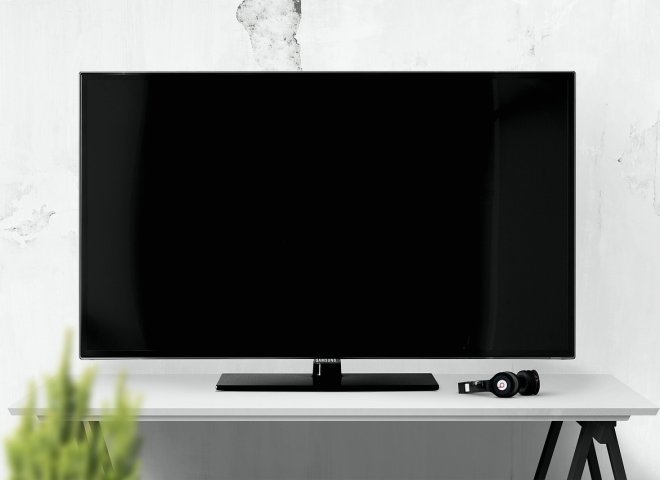
Gallery desk and monitor wall
A vision mixer, multiview monitors and intercom panel laid out so the director, vision mixer and producer can see and reach what they need. Labelling is checked before any cable is closed up.
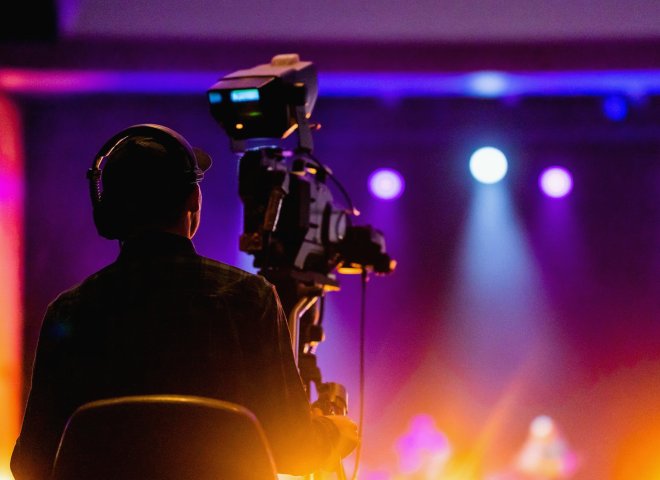
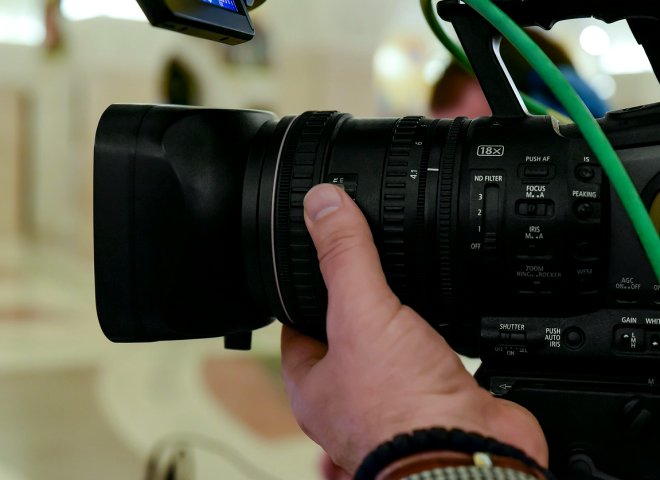
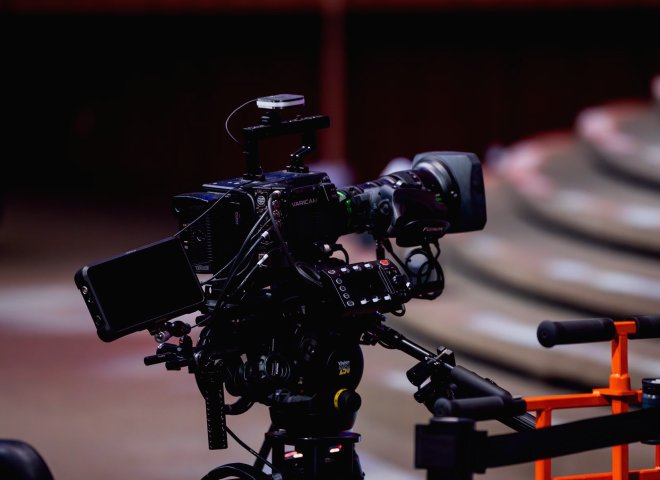
Camera on a studio pedestal
Pedestal cameras are positioned for the set and the format, with lens choice matched to the distance from presenter to guest. Cable lengths and floor marks are set so movement stays smooth during live shots.
Acoustic panels on a studio wall
Absorbent panels are placed where the survey found reflections, usually at first-reflection points and behind the cameras. The aim is clear speech without making the room feel dead.
LED lighting over a presenter desk
Key, fill and backlight are balanced on the presenter and the set, with colour temperature matched across fixtures. LED units keep heat and energy use lower than older tungsten rigs.
Crew rehearsing a running order
Producer, director and floor manager walk through the rundown with talkback live, checking cues and timings. Gaps and unclear handovers are found here and not on air.
Training session on the studio floor
A trainer works through camera moves and cueing with the crew, using the studio's own equipment. Sessions stay practical, with each operator handling the kit they will use on live days.
The choices that shape each studio project
Every studio differs, but the same few decisions come up each time. We make them in the open, write them down and leave your team able to run the room without us.
Plan before cabling
We draw the signal path, the camera positions and the lighting plan before anything is installed. That drawing is reviewed with the people who will use the room, since a producer or floor manager often spots a problem a plan alone would hide. Changes are cheap on paper and costly once cables are fixed. The final drawing stays with you.
Measure, then treat
Acoustic work begins with measurement, not guesswork. Priya surveys the room, notes reverberation and background noise, and recommends treatment only where it will help. Microphone choice and placement are tested again once panels are up. The aim is speech that is easy to hear and an edit that needs little repair.
Leave the crew confident
A studio is only reliable if the people using it understand it. We write cue sheets, label equipment and rehearse with the crew until routines hold under pressure. Where a team is taking over an existing studio, training uses their own programmes. Support on live days is available if you want it, not assumed.